
Diwali is when most families finally buy a proper Lakshmi murti — and, because the decision is made in a hurry in late October, it is also when most of them buy the wrong size. Here is the sequence that avoids that, from a workshop that makes these pieces year-round.
First: do you actually need a new murti?
Worth asking before anything else, because the honest answer is often no. A murti is installed once and worshipped for years; there is no tradition of annual replacement. The usual Diwali practice is to clean the existing murti, re-dress it, and give it a fresh chowki cloth. Buy a new one when you are moving into a new home, when your mandir has grown, when a piece is chipped or damaged, or when you are bringing a sculpted Lakshmi home for the first time instead of a framed photograph.
Second: size, measured rather than guessed
Measure the clear internal height of the mandir shelf and choose a murti at roughly two-thirds of it. A shelf with 10 inches of clearance wants a 6-inch murti; a dedicated pooja room with 15–20 inches wants an 11-inch. The remaining third is where a garland, crown or chunri goes — which matters enormously at Diwali specifically, when the murti is dressed. Our size guide has the full chart by mandir type.
One Diwali-specific point: leave room for Ganesha. If Lakshmi and Ganesha will sit together on the same chowki, measure the width as well, and remember the principal deity should be the tallest piece in the mandir.
Third: material — this is the decision that matters
It comes down to one question: will you pour anything on it?
| Hand-painted marble dust | Pure gold & silver plated | |
|---|---|---|
| Abhishek (water, milk) | Yes — finished to be waterproof | No — keep it dry |
| Haldi, kumkum, chandan | Yes, wipes clean | On the chowki, not the murti |
| Look | Full colour, hand-painted detail | Precious-metal lustre, hand-detailed |
| Diwali role | The murti you worship daily all year | The centrepiece of the festival mandir |
| Price (6″ / 11″) | ₹1,999 / ₹2,999 | ₹17,000 / ₹32,000 |
| Care | Wipe with a damp cloth | Soft dry cloth only |
Many families keep both, and that is genuinely the best arrangement: a plated Lakshmi as the centrepiece and a marble dust murti for hands-on daily worship. If you are choosing only one and you perform abhishek, choose marble dust — a plated murti damaged by water cannot be repaired. Our plating guide explains why, in detail.
Buy the murti you will still be worshipping next August, not only the one that photographs best on the night.
Fourth: the form, and the pairing
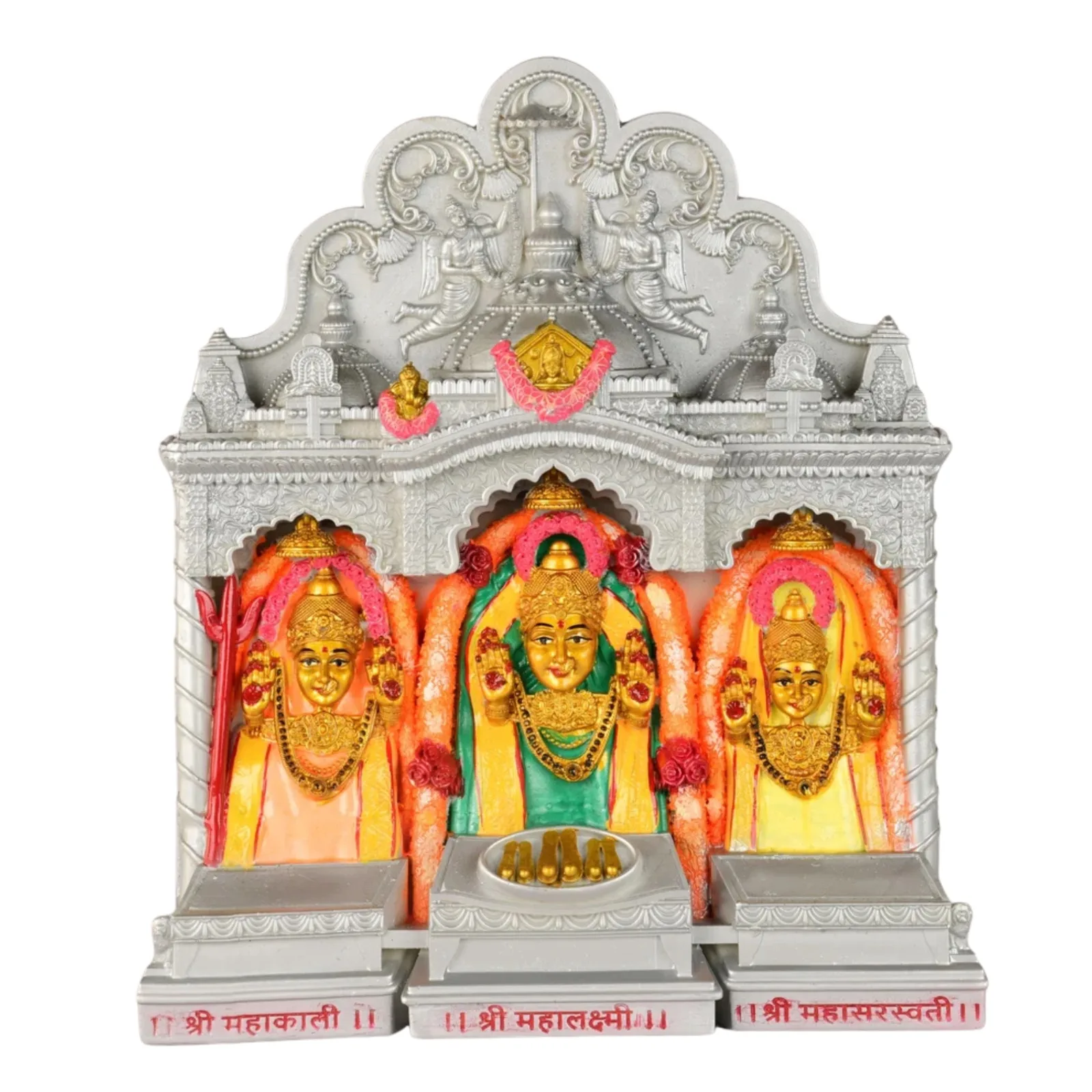
Tradition favours a seated Lakshmi for the home — sthir, settled wealth — over the standing form associated with temples and businesses, and there is a third option most lists skip: the temple-shrine murti, where the goddess is sculpted as she is enshrined in her sanctum. That is the form we make, with Mahakali and Mahasaraswati flanking Mahalaxmi under a silver-worked canopy. All three are covered in our sitting vs standing guide.
For the puja itself, place Ganesha on the left and Lakshmi on the right as you look at them, both raised on a clean chowki, never with Lakshmi behind Ganesha. Which way the mandir and the family should face is in the direction guide.
Fifth: order early, for an unglamorous reason
Prices do not rise as Diwali approaches — our workshop queue does. Every piece is hand-finished in sequence, and from early October that queue holds the year's corporate orders as well as family ones. Order by 30 September for Diwali on 8 November. If you plan to install the murti on Dhanteras (6 November), pull that forward by a week.
Start with the full collection, compare tiers in the price guide, or see the whole festival laid out on our Diwali 2026 hub. If you would also like a pandit for Lakshmi Puja, we arrange verified pujaris across Mumbai — the Diwali week books out first, so see the pujari page early.