
We sell gold plated murtis. We would rather you bought one understanding exactly what it is, because the alternative — a customer who thinks they bought solid gold — is bad for them and eventually bad for us. So this page explains the category, including the parts that do not flatter it.
Plating is a surface, and that is the point
Electroplating deposits a thin layer of gold over a base. On a murti that layer is measured in microns — thousandths of a millimetre. A 24K plated murti has 24-karat (99.9% pure) gold on the outside; the karat number describes the purity of the layer, not how much gold is present. A thick layer of 22K gold is a better product than a whisper-thin layer of 24K, which is why karat alone tells you very little and thickness tells you a great deal.
None of this makes plating inferior. A solid gold murti of any real size would cost more than most homes, and would need a bank vault rather than a mandir. Plating is how a family gets the presence of gold at a price that makes sense. It is an honest answer to a real problem.
The four things sold as “gold” murtis
| What it is | How to spot it | Typical price (6–8″) | Lasts |
|---|---|---|---|
| Gold-coloured spray or lacquer | No metal named; “golden finish”, “gold look”; very light | ₹300–₹1,500 | Dulls in months |
| Gold polish / flash plating | “Gold polished”; no micron figure published | ₹1,500–₹5,000 | 1–3 years |
| Genuine gold plating | Base material and micron thickness both stated | ₹6,000–₹35,000 | Many years, kept dry |
| Solid gold or silver | Sold by weight, with a hallmark and an assay | Lakhs | Indefinitely |
The second row is where most of the market's dishonesty lives. “Gold polished” is a legitimate process, but it is also the phrase of choice for sellers who want the word “gold” without committing to a number.
Ask for the micron figure. A seller who has one will give it to you immediately. A seller who does not will change the subject.
Five questions to ask any seller
- What is the base material under the plating? Brass, an alloy, or resin? Resin under gold plating is not automatically wrong, but you should be told.
- What is the plating thickness in microns? The single most informative number in this category, and the one least often published.
- Is this electroplated gold, or a gold-coloured coating? Ask directly. The answer, in writing, is your protection.
- Is there a written guarantee, and what does it actually cover? Tarnish? Peeling? For how long? “Lifetime shine” with no document behind it is marketing.
- Will you photograph my actual piece before dispatch? A workshop that makes to order can do this. A drop-shipper cannot.
Where we stand
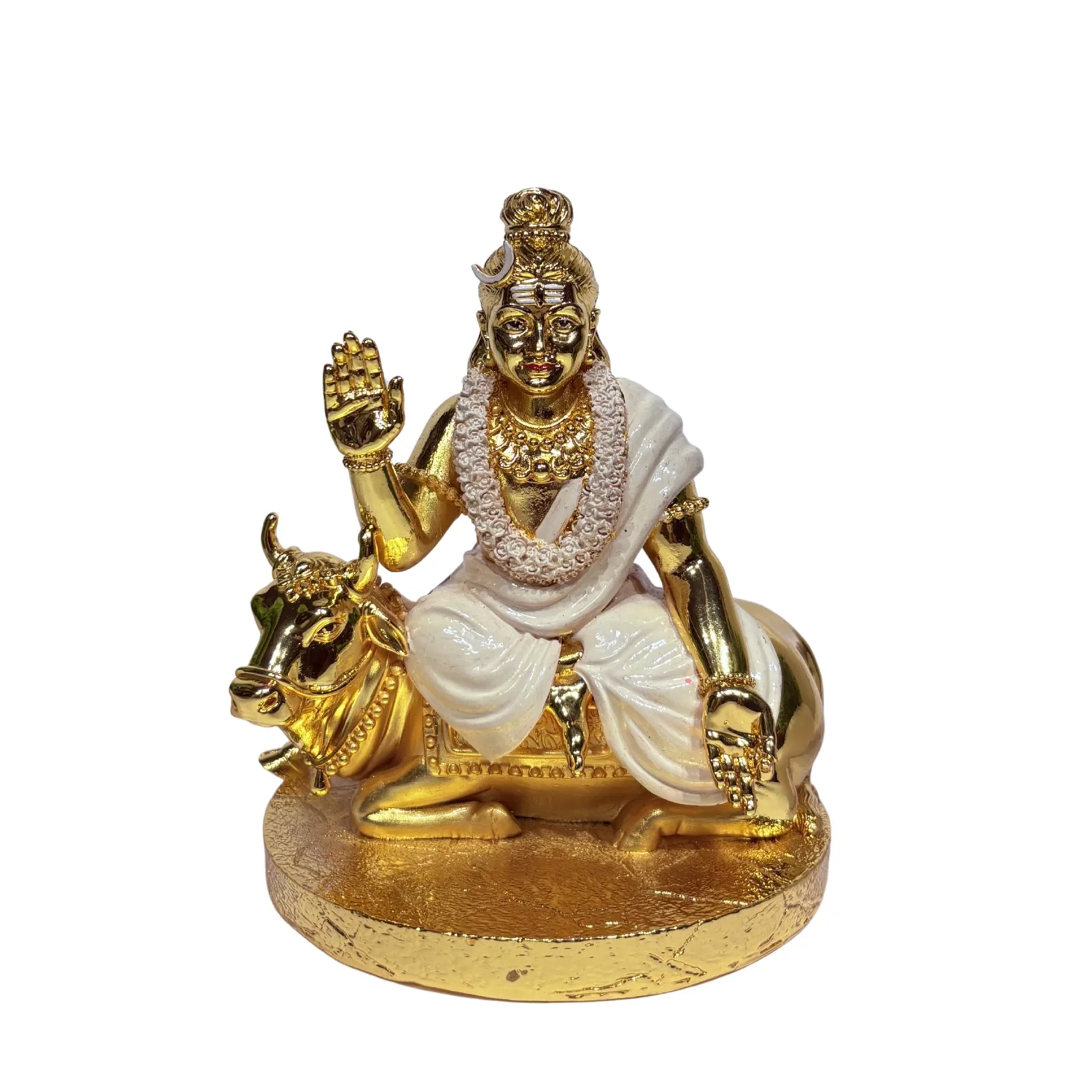
Our plated pieces are described as what they are: a sculpted body plated in pure gold and silver, then hand-detailed on the crown, lotus, palms and saree borders. Every product page publishes height, weight, material and country of origin, and we photograph your actual murti before it ships. We do not claim solid gold, we do not claim bullion value, and we do not use the phrase “gold polished” to blur the difference.
For the exact plating specification on the piece you are considering — base material and micron thickness for that model — message us on WhatsApp at +91 90041 04537 and we will send it before you order. We would rather answer that question than avoid it.
Caring for a plated murti
- Dry cloth only. Dust with soft, dry cotton. No water, no polish, no chemical cleaner.
- Keep it away from moisture. Not next to a window that gets rain, not in a bathroom-adjacent wall niche.
- No perfume, no attar, no chemical agarbatti residue on the plated surface.
- Do abhishek on a different murti. This is the important one — see below.
If you do daily abhishek, buy marble dust instead
This is the honest recommendation, and it sends some customers to a cheaper product. Water and milk will eventually creep under plating at the edges, and plating cannot be repaired in place. Families who perform daily abhishek should keep a hand-painted marble dust murti — ours are finished to be waterproof precisely for this — and reserve a plated piece as the mandir centrepiece. Many households keep both, and that is the arrangement we would suggest.
Browse the full collection, see what each tier costs in the price guide, or start with the 24K gold plated Shiva on Nandi (₹6,999) — the most accessible plated piece we make.