
Every Diwali and every griha pravesh, the same question comes to our workshop from customers across India: which direction should the Lakshmi idol face? Vastu traditions offer clear, simple conventions — and they are gentler than most internet lists suggest. Here is what the common tradition actually says, from a family that makes Lakshmi murtis for a living.
The direction rule, properly understood
Vastu guidance is really about your direction, not the idol's. The convention is that the worshipper should face east (the direction of the rising sun and new beginnings) or north (the direction of Kubera, lord of wealth) while offering prayers. The idol then simply faces back at you:
- If you face east while praying → the idol faces west. This is the most common home arrangement.
- If you face north while praying → the idol faces south. Equally accepted.
So a Lakshmi murti "facing west" is not a problem — it usually means the family is praying facing east, which is exactly right.
Where should the mandir itself be?
The north-east corner (the ishan kona) is traditionally the most auspicious zone for the pooja space. If the north-east is not available in your home's layout, the east or north side of any quiet, clean room is the accepted alternative. Quick reference:
| Situation | Convention |
|---|---|
| Ideal mandir zone | North-east corner of the home |
| You face while praying | East or north |
| Idol placement height | Raised on a clean chowki or shelf — never directly on the floor |
| Gap from wall | Leave a small gap; the murti should not touch the wall |
| Avoid | Facing a bathroom door, under a staircase, in the bedroom's line of the bed |
| Lakshmi–Ganesha pair (Diwali) | As you look at them: Ganesha left, Lakshmi right |
Sitting or standing Lakshmi — which for a home?
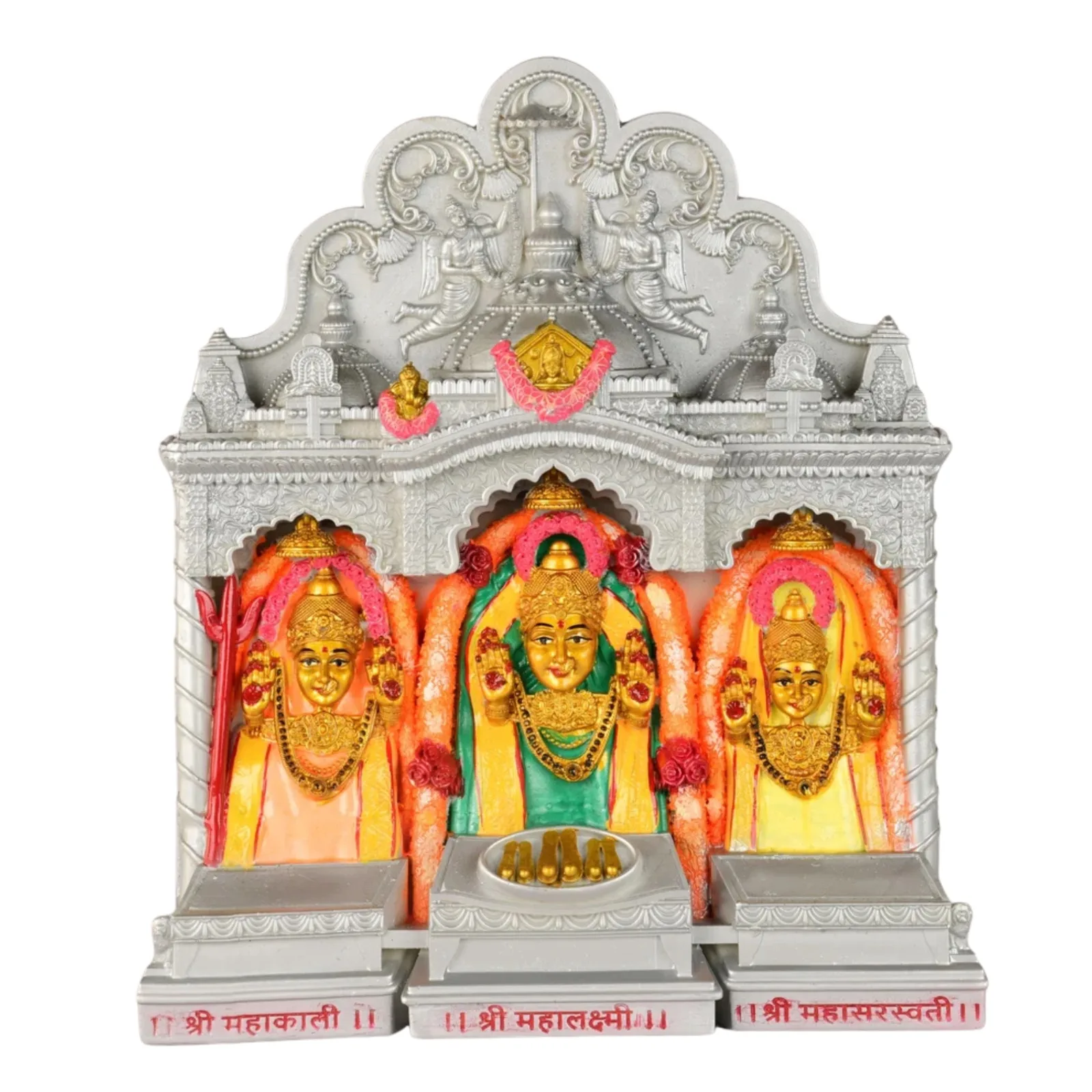
Tradition favours a seated Lakshmi for homes: seated on her lotus, she represents sthir (stable, settled) wealth that stays with the family. A standing Lakshmi is described in many traditions as chanchal — wealth in motion — and is more commonly installed in temples. There is also a third form that these lists rarely mention: the temple shrine, where the goddess is sculpted as she is enshrined in her sanctum. That is what our Mahalaxmi murtis are — Mahalaxmi with Mahakali and Mahasaraswati beneath a temple canopy. We compare all three in our guide to sitting vs standing Lakshmi idols.
Placement customs are a way of giving the goddess the most respected seat in your home. Follow them as far as your home allows — and let devotion, not anxiety, lead.
Common placement mistakes (easily fixed)
- On the floor: always raise the murti on a chowki, shelf or mandir platform.
- Crowded shelf: leave breathing room around the deity; one central murti with space reads better than many crammed together.
- Chipped or damaged idols: tradition recommends respectfully retiring damaged murtis rather than continuing worship.
- Facing the main door directly: conventions differ regionally here — most families avoid pointing the murti straight out of the house, keeping Lakshmi "facing inward" so prosperity stays within.
Choosing the murti itself
Once the direction is settled, size and material decide the rest. For most apartment mandirs, a 6-inch Mahalaxmi fits perfectly; for a dedicated pooja room, the big-size 11-inch murti gives commanding presence. For Dhanteras, Diwali or heirloom gifting, our pure gold & silver plated Mahalaxmi is the piece families choose. If you're still deciding, start with our murti size guide and the 2026 price guide, or plan the festival with our Diwali 2026 hub.