
Dhanteras is the day the jewellery trade waits all year for, which means it is also the day you will be told the most nonsense. The custom underneath the advertising is older, gentler and considerably cheaper than the version sold to you every November.
What Dhanteras marks
The day honours Dhanvantari, the physician of the gods who emerged from the churning of the ocean carrying the pot of amrit — which is why the festival is associated with health and wellbeing as much as wealth. Dhan (wealth) and teras (the thirteenth lunar day) give it its name. It opens the five days of Diwali and is the day the first diya of the festival is lit, traditionally placed at the doorway facing south.
What should you buy on Dhanteras?
The custom is to acquire something metal, valuable and lasting. That is the whole specification, and it is deliberately broad:
| Traditional purchase | Why it counts | Typical spend |
|---|---|---|
| Gold or silver coin | The classic — a store of value entering the home | ₹5,000 upwards |
| Silver utensils or a silver diya | Metal, lasting, used in worship | ₹2,000–₹15,000 |
| New brass or steel kitchen utensils | The most widely practised version of the custom | ₹500–₹3,000 |
| A Lakshmi or Lakshmi–Ganesha murti | Brings the deity of the festival home before the main puja | ₹2,000–₹35,000 |
| A broom | Genuinely traditional — associated with sweeping out misfortune | ₹100 |
That last row is not a joke. Buying a new broom on Dhanteras is a real and widespread household custom, and it is a useful corrective to the idea that the day demands an expensive purchase.
Dhanteras asks for an auspicious acquisition, not an expensive one. A brass vessel bought with intent observes the day as fully as a gold coin.
Does a gold plated murti count? An honest answer
We sell gold and silver plated Lakshmi murtis, so treat what follows with appropriate scepticism — and then check it against our plating transparency page, which says the same thing.
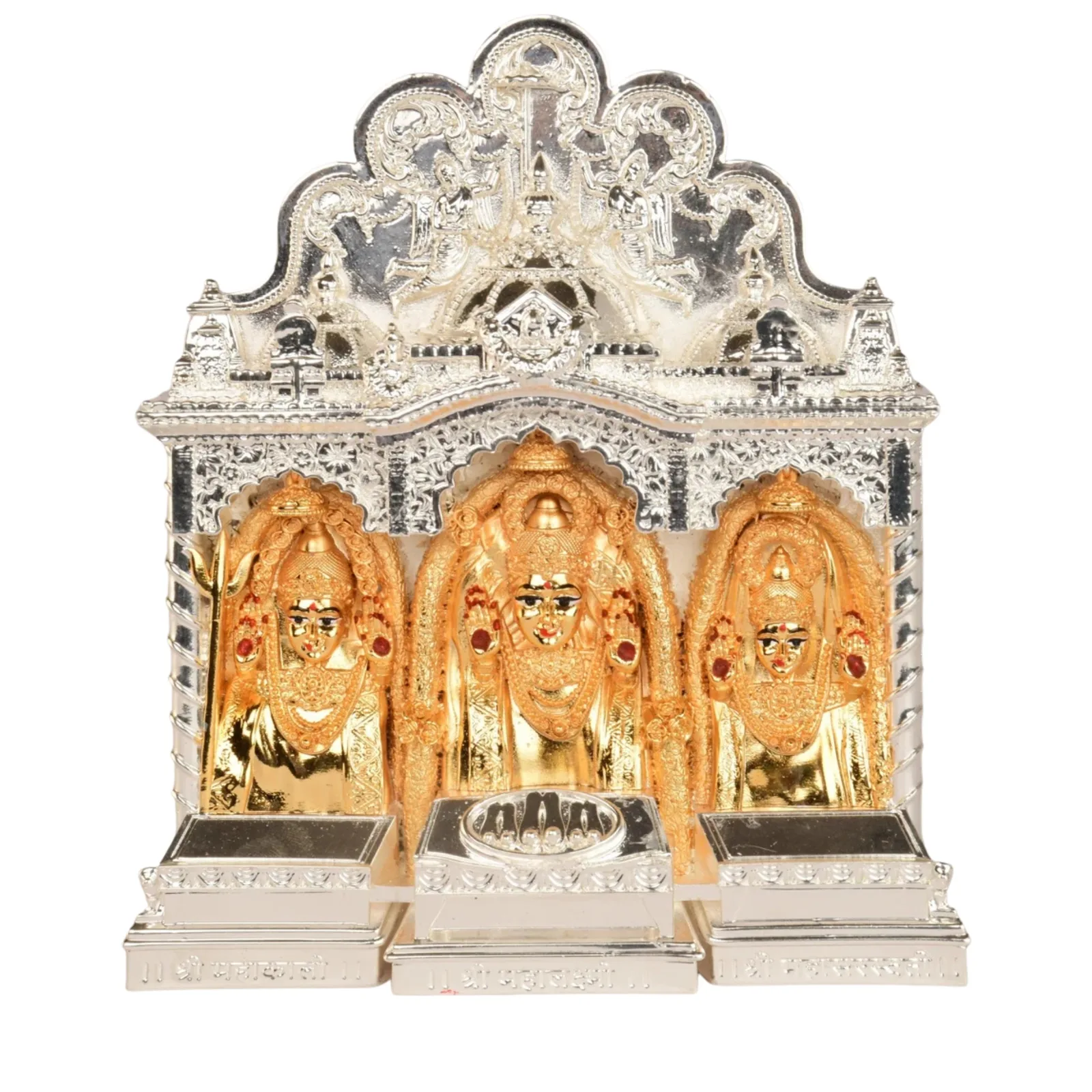
A plated murti is in the spirit of Dhanteras: it is a precious-metal-finished object, it is lasting, and it is an image of the very goddess the festival is about. Bringing Lakshmi home in gold on the day she is invoked is a meaningful thing to do, and it is why our plated pieces sell out first every November.
But it is not an investment in gold. Plating is a surface layer measured in microns; a plated murti has no bullion value and will never be sold by weight. If your intention on Dhanteras is to buy gold as an asset, buy a coin. If your intention is to bring a beautiful, lasting Lakshmi into your mandir, buy the murti. Do not let anyone — including us — blur those two into one purchase.
What not to buy
- Sharp iron implements — knives, scissors and blades are traditionally avoided on the day.
- Black items — widely considered inauspicious for a festival about light.
- Anything second-hand or damaged — and for murtis this is a firm rule, not a preference. A chipped murti is never installed.
- Empty vessels — if you buy utensils, custom is to bring them home holding something: rice, grain, water or sweets.
Bringing home a murti on Dhanteras
If a murti is your Dhanteras purchase, the practical points are simple. Buy it whole and inspect it. Bring it home before sunset if you can. Place it on a clean, raised chowki rather than putting it away in packaging until the 8th — many families install it on Dhanteras and perform the main Lakshmi Puja on it two days later.
For size, our measuring guide takes two minutes; for what each tier honestly costs, see the price guide. The pieces most often bought for Dhanteras from our workshop are the 6-inch pure gold and silver plated Mahalaxmi (₹17,000) and, for families who want presence in a full pooja room, the 11-inch (₹32,000). For daily abhishek through the year, the hand-painted marble dust Mahalaxmi is the better companion piece.
One scheduling note: order by 30 September. Hand-finished pieces go through a queue that is full from October, and we would rather tell you that in August than in the last week of October. The full festival calendar is on our Diwali 2026 hub.