
It Begins with Inspiration
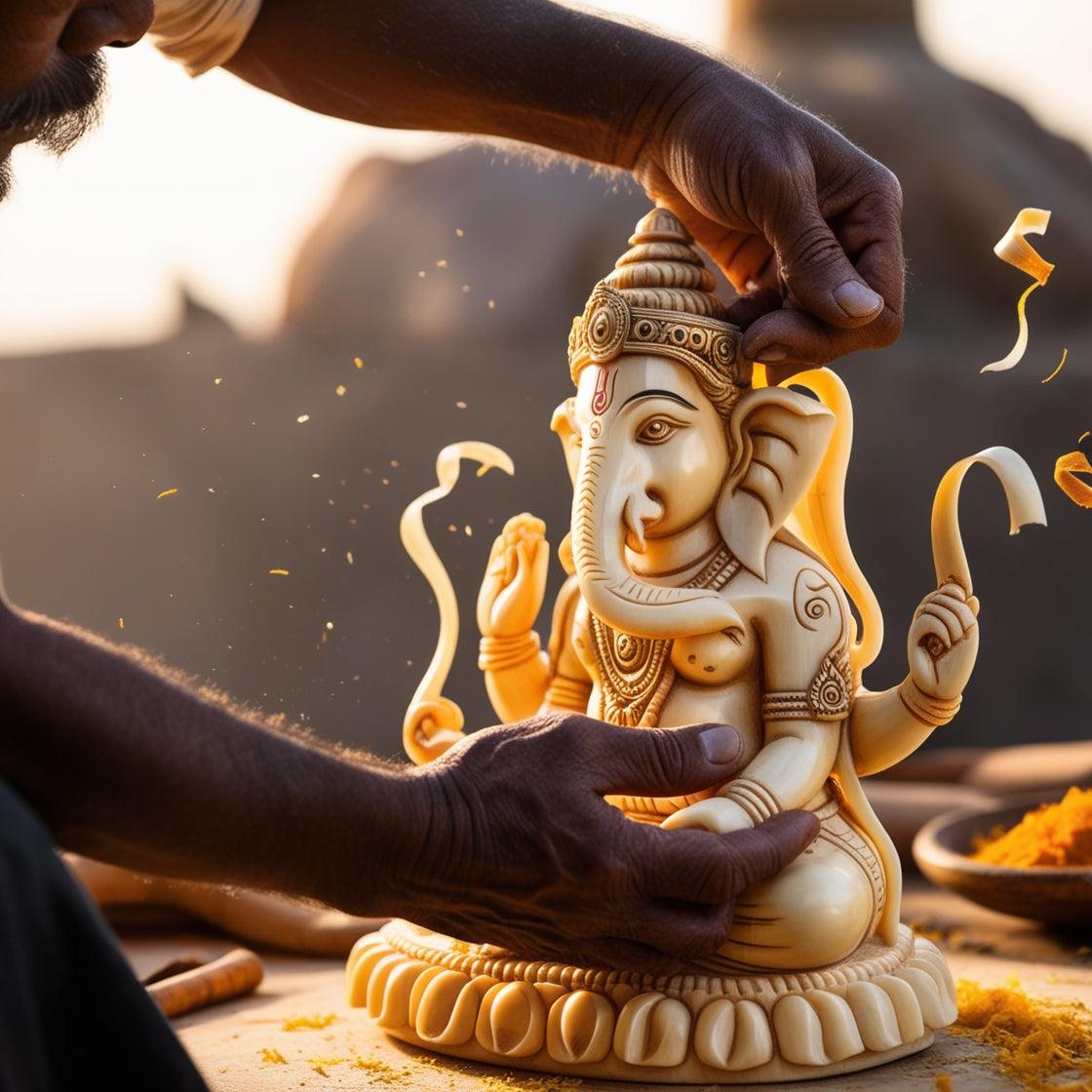
Long before a single tool is picked up, a murti begins as a feeling. Our artisans study the deity they are about to shape — the gentle abhaya mudra of a blessing hand, the poise of Mahalaxmi seated upon her lotus, the mischief in a young Krishna's smile. These forms have been passed down through generations of Indian sculptors, and we treat each one with reverence. A reference is chosen, proportions are considered, and the mood of the finished idol is agreed upon. This first quiet stage is where devotion enters the work, and it stays with the piece through every step that follows.
Sculpting from Marble Dust
The body of every idol is built from finely ground marble dust, a material we love for its weight, its smoothness, and its resemblance to true carved stone. The dust is mixed into a workable composite and shaped inside a hand-finished mould, then allowed to set until it holds a firm, stone-like form. What emerges is not yet a deity — it is a pale, unadorned figure with soft edges and undefined features. But the essential silhouette is there: the seated posture, the crown, the folds of a garment beginning to take shape. This raw form is the foundation on which all the beauty will later be built.
An idol is not merely made. It is offered. Every hour our artisans give to a piece is a small act of devotion, and we believe that quiet intention is what people feel when the murti finally reaches their home.
The Art of Detailing
Once the base has cured, the real artistry begins. Working with fine files and delicate carving tools, our artisans refine the murti by hand — sharpening the line of a jaw, deepening the pleats of a saree, defining fingers, jewellery, and the petals of a lotus. This is patient, unhurried work. A single ornate crown can take hours to bring into focus. Because so much is done by hand, no two idols are ever perfectly identical, and we consider that one of their quiet joys. Each piece carries the subtle signature of the person who shaped it.
Hand-Painting Each Feature
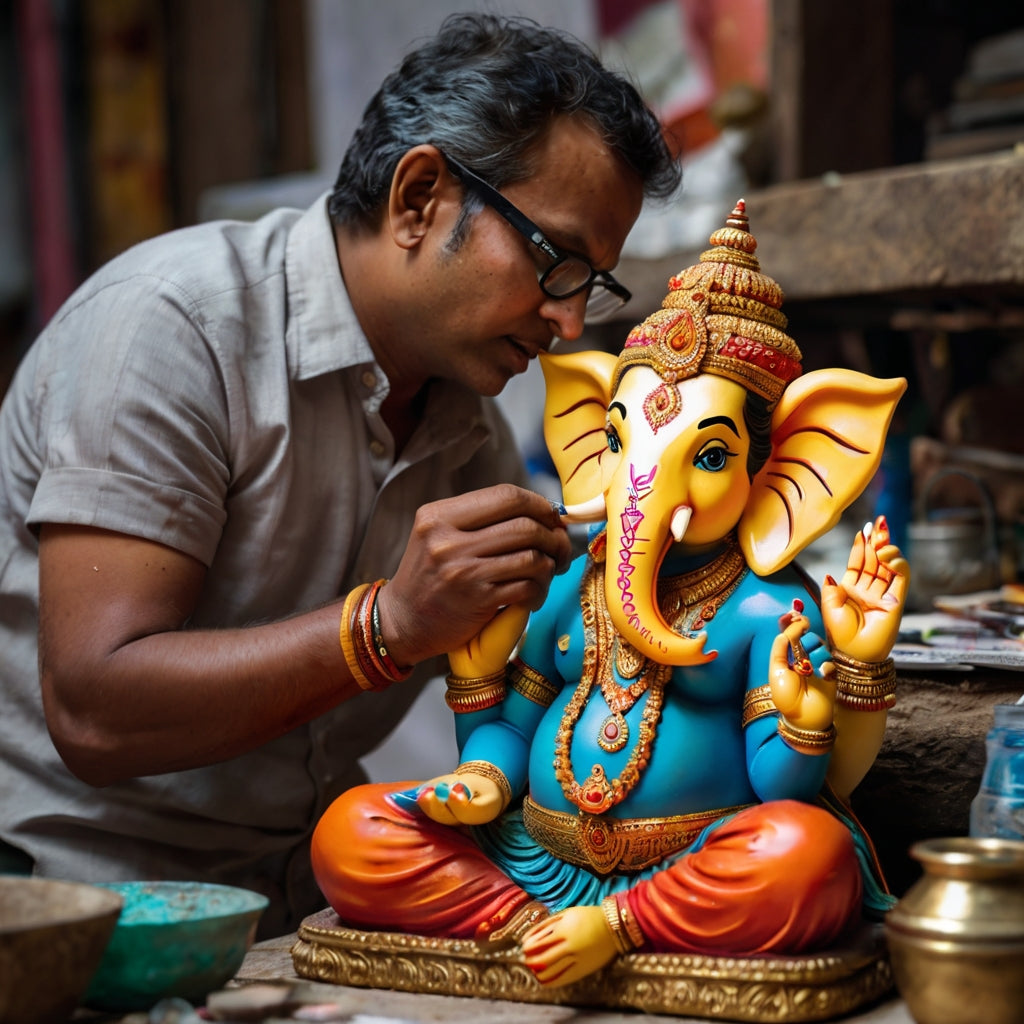
With the form complete, colour brings the deity to life. Our painters work in careful layers, beginning with base tones and building toward the finest details last. The eyes are always the most important moment — a murti truly awakens only when its gaze is set with a steady hand. Skin, garments, jewellery, and the delicate patterns along a border are painted one element at a time, often under magnification. For our gold and silver plated pieces, precious metallic finishes are applied so that ornaments and crowns catch the light exactly as they should. It is slow, meticulous work, and it is where a plain figure becomes something worthy of your pooja room.
The Waterproof, Plastic-Coated Finish
A murti is meant to live with a family for years, often through daily rituals of water, kumkum, and oil. To protect all that fine hand-painted detail, we seal each finished idol with a clear, waterproof, plastic-coated finish. This protective layer guards the colours against moisture and everyday handling, keeps the surface easy to wipe clean, and helps the murti hold its brilliance far longer than an unsealed piece ever could. It is the difference between an idol that fades and one that stays radiant through many festivals.
Quality Control
Before any murti earns a place in our collection, it passes through a careful inspection. We check the paintwork for evenness, the features for symmetry, the finish for a flawless seal, and the base for stability. We look closely at the eyes, the fingers, and the fine jewellery — the small details that separate an ordinary idol from a truly divine one. Anything that does not meet our standard is set aside and reworked. We would rather hold a piece back than send it out less than perfect.
Careful Packaging & Delivery
The final stage is making sure your murti arrives exactly as it left our workshop. Each idol is wrapped in protective layers, cushioned against movement, and packed snugly so it can travel safely across India. We take real pride in this last step, because the journey from our hands to your home should end in the same joy with which the piece was made.
Every idol you see in our collection has passed through all of these stages — inspired, sculpted, detailed, painted, sealed, inspected, and lovingly packed. When you welcome one into your home, you are welcoming the quiet devotion of the many hands that shaped it.