
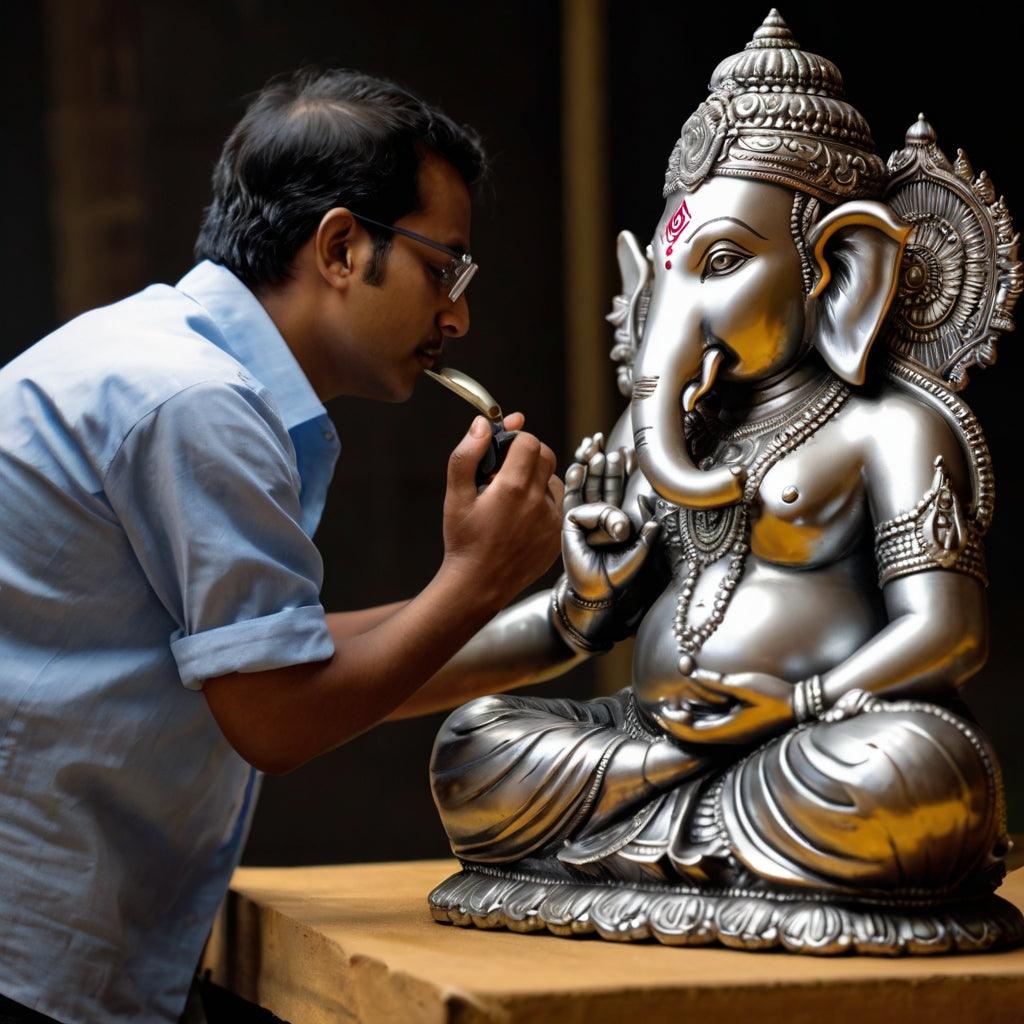
What Exactly Is Marble Dust?
Marble dust is the fine powder that remains when natural marble is cut and shaped. Rather than treat it as waste, artisans have long blended this powder with natural binders into a smooth, workable material that is then cast, carved and refined into a finished idol. The result holds the soul of real marble — its density, its cool touch, its soft luminance — while giving our craftsmen the freedom to render fine details that solid stone rarely allows.
Because the material is built up rather than chipped away, every fold of a saree, every strand of jewellery and every gentle expression can be shaped with precision. This is why a marble dust Mahalaxmi or Ganesha carries such lifelike detail: the medium itself is designed for devotion.
Built to Last for Generations
Durability begins with density. A marble dust murti is solid and substantial in the hand, not hollow or brittle. It does not warp with age, it does not fade the way painted resin can, and it holds its form through years of aartis, abhishekams and daily darshan.
This is what makes marble dust a natural choice for a family altar. A murti installed for a child's naming ceremony can still preside over that child's own Griha Pravesh years later, its features as crisp as the day it arrived.
A true murti is not bought for a season. It is welcomed into a home to be worshipped today, and remembered by those who come after.
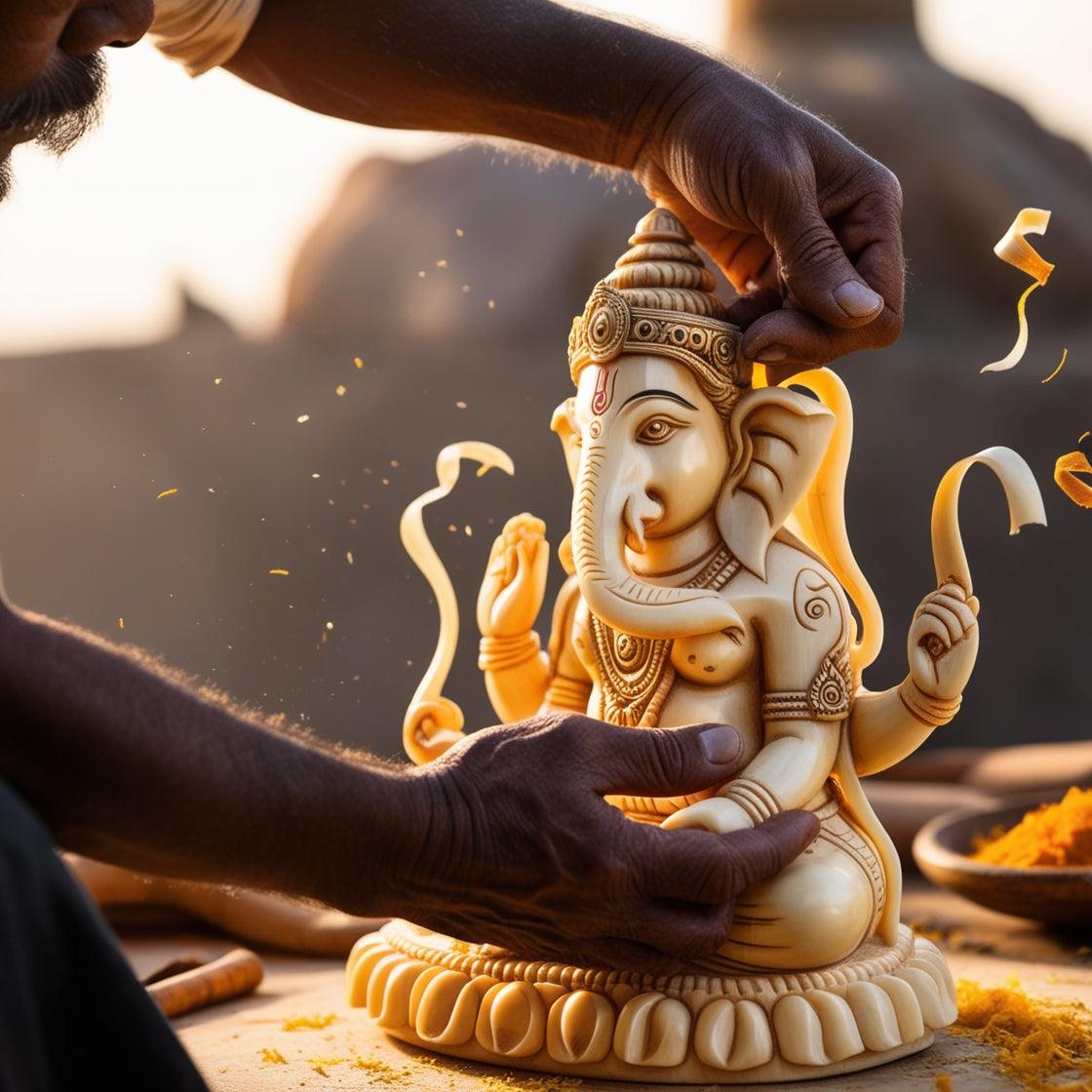
The Waterproof Advantage
Worship involves water. Between abhishekam, the daily wiping of the idol and the humidity of an oil lamp burning close by, a sacred piece meets moisture far more often than an ordinary decoration ever would. That is why every Vishnupriya Arts murti receives a protective, plastic-coated waterproof finish.
This sealed layer does two things at once. It locks in the hand-painted colour and gold or silver detailing so it stays vivid, and it shields the surface from water damage, staining and the slow dulling that untreated stone can suffer. A quick wipe leaves the idol glowing rather than watermarked.
How It Compares to Other Materials
It helps to see where marble dust sits among the common choices for an idol:
- Resin and plastic: light and inexpensive, but prone to fading, and they never carry the honest weight of stone.
- Plaster of Paris: easy to mould, yet soft, fragile and quick to chip at the edges.
- Solid marble: beautiful and enduring, but heavy, costly, and difficult to carve into fine, flowing detail.
- Marble dust: the balance point — the presence and longevity of stone, with the delicacy of a finely detailed, hand-painted finish.
For a piece that must be both a work of art and an object of lasting worship, marble dust quietly outperforms the alternatives.
Caring for Your Marble Dust Murti
Caring for your idol is simple and takes only a moment:
- Wipe gently with a soft, dry or lightly damp cloth to remove dust and lamp residue.
- Avoid harsh chemical cleaners, scouring pads or abrasive powders on the finish.
- Keep the murti on a stable surface, away from the edge of a shelf where it could be knocked.
- Handle it by the base rather than by delicate raised details when moving it.
Treated with this small, steady care, a marble dust murti asks for very little and gives back for a very long time.
Ready to welcome one into your home or temple? Explore our marble dust collection and find the deity, size and finish that speaks to your space.